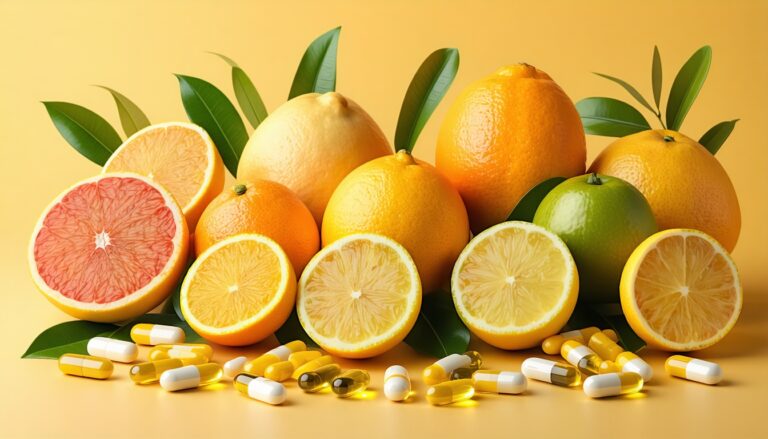

Vitamin C Vitamins are more than just a remedy for the common cold—they’re essential tools for keeping your immune system sharp, your skin glowing, and your heart strong. Whether you’re munching on guavas or considering a supplement, getting enough Vitamin C can make a significant impact on your health. This article dives deep into the importance of Vitamin C, how to recognize deficiency symptoms, and what to look for when choosing the right supplement.
Introduction to Vitamin C Supplements
Why Your Body Loves Vitamin C
Vitamin C is pretty much like your body’s Swiss army knife. It’s a key player in keeping your whole system chugging along smoothly. Got a scratch? Vitamin C’s got your back for rapid healing. Those pesky free radicals trying to mess with your cells? Vitamin C steps up as your personal defender. Run low on it, and your immune system might start waving its white flag, and in extreme cases, scurvy might come knocking.
And let’s not forget collagen – that stuff that keeps your skin looking fab and your vessels strong. It’s like the glue holding you together, and Vitamin C makes sure it’s sticking just right. Plus, it might even help calm high blood pressure chaos (Healthline).
Where to Score Vitamin C
Getting your daily dose of Vitamin C is simpler than doing a jigsaw puzzle with missing pieces. Chow down on fresh fruits and veggies, and you’ll be on your way. But remember, cooking can steal away some of that vitamin blast, so give microwaving or steaming a shot instead of boiling your greens to keep up their morale.
Check out some top picks:
| Snack Attack | Vitamin C (mg per 100g) |
|---|---|
| Guava | 228 |
| Kiwi | 93 |
| Red Bell Pepper | 190 |
| Orange | 53 |
| Strawberries | 58 |
| Broccoli | 89 |
If your meal plan’s a bit low on the C-scale, consider bringing a vitamin C supplement into the equation. From powders to capsules, there’s a stash that’ll fit right into your lifestyle without a hassle.
But hey, food’s got a lot going for it besides just Vitamin C. Munch on some food rich in vitamin c, and you’ll snag a bunch of other goodies for overall health bliss. Oh, and don’t skip out on learning how this mighty vitamin can give your skin a glow or support your hair game (vitamin c supplement for skin, vitamin c for hair growth).
Understanding Vitamin C Deficiency
So, you know Vitamin C is the go-to superhero nutrient, right? But what happens when your body doesn’t get enough? Spoiler alert: It’s not pretty. Let’s break down the tell-tale symptoms and see who might be running low on this vital vitamin.
Signs of Vitamin C Deficiency
Worried you might not be getting your daily dose of Vitamin C? Keep an eye out for these red flags:
- Spoon-shaped Fingernails: Also known as koilonychia, this is when your nails start doing their own upward dance, sometimes with red lines underneath.
- Easy Bruising: Bruise like a peach? It might be weak blood vessels doing a poor job, thanks to a lack of Vitamin C.
- Scurvy: The old pirate disease! Think bleeding gums, anemia, sluggish healing, and dark bruises (Mayo Clinic).
- Joint Pain and Swelling: Hurting joints can make even standing tough. These aches usually ease up when you up your Vitamin C game (Healthline).
- Rapid Onset of Symptoms: And guess what? These symptoms aren’t polite—they can show up fast, within a few months of a Vitamin C deficiency (WebMD).
| Symptoms | Quick Description |
|---|---|
| Spoon-shaped nails | Upward curving nails with red spots. |
| Easy bruising | Bruising from barely-there bumps. |
| Scurvy | Anemia, bleeding gums, and sluggish healing. |
| Joint pain | Achy joints making movement tough. |
| Rapid symptom onset | Quick symptom appearance when Vitamin C levels drop. |
Risk Factors for Deficiency
Now, who’s more likely to fall into the Vitamin C dip? Let’s find out:
- Diet: If you’re munching on junk and missing out on fruits and veggies, you might be among the 7% of U.S. adults who aren’t getting enough of this vitamin.
- Smoking: Tobacco lovers out there, listen up—you need an extra 35mg daily just to keep up with non-smokers (NIH Office of Dietary Supplements).
- Milk for Babies: Parents, watch out if your baby’s milk has been boiled or evaporated, since it’s a no-go zone for Vitamin C.
- Other Influencers: Heavy drinking, kidney issues, mental health troubles or eating disorders also make you more vulnerable. Not eating right is often to blame too (Healthline).
- Daily Needs: Aim for 75 mg for women and 90 mg for men every day, folks. Knowing these numbers can help you stay on track.
Keeping tabs on these signals and potential risk factors can steer you toward getting enough Vitamin C, either via supplements or with a balanced diet that packs in food high in Vitamin C. If you’re worried about your Vitamin C stash, a chat with your healthcare provider is a smart move.
Benefits of Vitamin C Supplements
Impact on Heart Health
Taking Vitamin C supplements can be like giving your heart a little extra armor. Some folks who down at least 700 mg of Vitamin C every day found a silver lining: a 25% drop in heart disease risk over a decade compared to those who skipped the supplements.
The perks don’t stop there. Vitamin C is also like a little pressure release valve for your blood. Studies show it can nudge your systolic blood pressure down by 3.8 mmHg and diastolic by 1.5 mmHg if you’re dealing with high or normal levels. So, if a healthy heart’s on your wish list, throwing Vitamin C into the mix might be just the ticket.
| Heart Health Perks | The Vitamin C Effect |
|---|---|
| 25% less chance of heart disease (700 mg/day) | Over 10 years |
| Lowering systolic blood pressure | 3.8 mmHg |
| Lowering diastolic blood pressure | 1.5 mmHg |
Role in Wound Healing
Vitamin C is like your skin’s trusty sidekick, lending a hand in patching up cuts and scrapes by boosting collagen, that crucial building block for repair work. It’s also got your back with neutrophils, those white blood cells that gear up to battle infections (WebMD). Keeping your vitamin C topped up makes sure your wounds don’t overstay their welcome.
If healing is taking forever, it might be a blinking sign that you’re skimping on Vitamin C. Without enough of it, your tissues can’t form properly and collagen doesn’t get made, leaving you with wounds that might pop back open, inviting infections for a second round (Healthline). Adding Vitamin C supplements into your routine might just help speed up the recovery train.
To load up on Vitamin C through food, take a peek at our articles on food with vitamin c, food high in vitamin c, and food rich in vitamin c.
Recommended Daily Intake of Vitamin C
Knowing how much Vitamin C you need every day helps keep you on track for better health. Let’s break down how much you should aim for and think about the different needs some folks might have.
Recommended Amounts
Your daily dose of Vitamin C changes based on who you are. Here’s how it shakes out for grown-ups:
| Age Group | Daily Needs |
|---|---|
| Adult Women | 75 mg |
| Adult Men | 90 mg |
Chowing down on a diet loaded with foods high in vitamin C usually does the trick. Most folks in countries with plenty of food get more than enough, with guys typically having about 105.2 mg/day and gals around 83.6 mg/day, according to the NIH Office of Dietary Supplements.
If you’re worried you’re not getting enough or just want a boost, think about adding a vitamin C supplement to your routine.
Considerations for Different Groups
Some people have a tougher time getting enough Vitamin C or need a little extra. Consider these points for different folks:
- Smokers: Lighting up means your body has more cells to fix, so smokers need an extra 35 mg per day to help mop up the damage.
- Pregnant and Breastfeeding Women: You’ll need more Vitamin C, so chat with your doc to nail down the right amount.
- People with Limited Diets: If access to healthy foods is tricky, Vitamin C might be in short supply.
- Folks with Certain Health Issues: If you’re dealing with kidney problems or other chronic conditions, you might need to adjust how much Vitamin C you’re getting.
Missing out on Vitamin C for a few months can cause problems if you dip below 10 mg/day, says WebMD. Keep munching on foods rich in vitamin C and maybe add supplements to hit those targets.
For more on how to keep those Vitamin C levels up, check out ascorbic acid and see how it fits in with your diet and wellness goals.
Choosing the Right Vitamin C Supplement
Looking to give your immune system a solid boost? Picking the right vitamin C tablets can be a game-changer. Here’s the lowdown on how to sort through your options and what to keep an eye on.
Types of Vitamin C Supplements
Vitamin C comes in all shapes and sizes, each offering its own perks. Let’s break down some of the usual suspects you might meet:
| Supplement Type | Description |
|---|---|
| Ascorbic Acid | The MVP of vitamin C—affordable and common. It’s just as effective as the C you get from munching on oranges or broccoli. |
| Buffered Vitamin C | This one’s got minerals to keep it easy on your tummy. Ideal if regular ascorbic acid makes your stomach rumble in a bad way. |
| Ester-C | A fancy blend with calcium ascorbate that’s kinder to your digestive system and sticks around longer. |
| Liposomal Vitamin C | Wrapped in liposomes for better absorption. It’s got great bioavailability but can be a bit pricey. |
| Chewable Tablets | Perfect if you don’t wanna swallow pills. These come in tasty flavors, making your C intake less of a chore. |
| Capsules | Simple and hassle-free for those not into chewing. Usually packed with powdered vitamin C. |
Want more scoop on vitamin C picks? Read our piece on vitamin c supplement.
Factors to Consider
Before snagging a vitamin C supplement, think about these key pointers:
- Dosage: Figure out how much vitamin C you’re aiming for. Daily needs differ, so chat with a health pro if you’re unsure.
- Form of Vitamin C: Ascorbic acid is friendly on your wallet with solid bioavailability, but if your gut isn’t a fan, try out buffered types or Ester-C.
- Additives and Fillers: Check the label to dodge unnecessary extras, like artificial colors or preservatives, that might not fit with how you eat.
- Bioavailability: Go for options that absorb well for max benefits. Ascorbic acid packs the same absorption punch as natural vitamin C (Office of Dietary Supplements, NIH).
- Brand Reputation: Opt for trusted brands that do third-party tests for quality. Peeking at customer reviews can give you insight on what works.
- Budget: These supplements come in many price points. Weigh affordability with quality to make the best choice.
- Lifestyle Needs: If glowing skin is your goal, hunt for vitamin C tailored for that, like our vitamin c supplement for skin.
Remembering these points sets you up to find the vitamin C that fits your life like a glove. For more on what foods are packed with vitamin C goodness, see our articles on food high in vitamin c and food rich in vitamin c.
Potential Risks and Interactions
When you’re thinking about adding vitamin C to your daily routine, knowing the possible risks and interactions is a smart move. While it’s a key nutrient, taking too much can lead to problems.
Side Effects of Taking Too Much
Popping too many vitamin C pills, especially over 2,000 mg a day, can bring some unwanted side effects. Here’s what might happen:
- Tummy Troubles: Swallowing a heap of vitamin C can make your stomach queasy.
- Run to the Bathroom: Overdoing it can give you diarrhea since your body wants to flush out the excess.
- Kidney Stones: While not common, loading up on vitamin C could lead to kidney stones.
Pregnant folks, tread carefully—too much might cause issues for your little one after birth. On the bright side, when taken in the right amounts, vitamin C supplements are usually a-okay. But don’t play doctor; check in with your healthcare provider for the best advice.
| Daily Intake | Potential Side Effects |
|---|---|
| Up to 2,000 mg | Usually fine |
| Over 2,000 mg | Stomach upset, diarrhea, kidney stones |
Mixing with Medications
Vitamin C can mess with certain medications, throwing off how well they work. A biggie is fluphenazine, an antipsychotic medication. Taking a ton of vitamin C might decrease the level of fluphenazine in your system, lessening its punch. If you’re on meds, get in touch with your doctor before mixing vitamin C into your day.
In short, while vitamin C is a champ for your immune system and overall wellness, you gotta pay attention to how much you take and what you’re mixing it with. For more scoop on vitamin C supplements, check out our articles on vitamin C supplement and vitamin C for skin. Stick to what’s recommended for you to enjoy the benefits without the risks.
Final Thoughts
Vitamin C plays a vital role in numerous bodily functions—from wound healing to blood pressure regulation and immune defense. While a well-rounded diet rich in fruits and vegetables usually meets your needs, supplements can offer an extra layer of support for those with dietary gaps or higher requirements. Just remember: more isn’t always better. Stick to recommended dosages, consider your unique health needs, and consult with a healthcare provider if you’re unsure. When used wisely, Vitamin C can be a simple yet powerful ally in your daily wellness routine.
Frequently Asked Questions (FAQ)
How much Vitamin C should I take daily?
For most adults, the recommended daily intake is 75 mg for women and 90 mg for men. Smokers, pregnant individuals, and those with specific health conditions may need slightly more. Always consult a healthcare provider for personalized guidance.
Can I get enough Vitamin C from food alone?
Yes, many people can meet their Vitamin C needs through a balanced diet rich in fruits and vegetables such as guava, kiwi, strawberries, red bell peppers, and broccoli. However, cooking methods like boiling can reduce Vitamin C content, so steaming or eating raw may help retain nutrients.
What are the signs of Vitamin C deficiency?
Common signs include easy bruising, spoon-shaped fingernails, joint pain, bleeding gums, slow wound healing, and fatigue. Severe deficiency can lead to scurvy. If you notice these symptoms, consider increasing your intake or speaking with a healthcare professional.
Are all Vitamin C supplements the same?
No. Supplements come in different forms like ascorbic acid, buffered Vitamin C, Ester-C, liposomal C, chewables, and capsules. Each has unique benefits, such as enhanced absorption or gentleness on the stomach.
Is it possible to take too much Vitamin C?
Yes. While Vitamin C is water-soluble and excess amounts are generally excreted, taking more than 2,000 mg per day can lead to stomach upset, diarrhea, and even kidney stones in some cases. Stick to the recommended upper limit unless directed otherwise by a healthcare provider.
Can Vitamin C interact with medications?
It can. For instance, high doses of Vitamin C may reduce the effectiveness of certain medications like fluphenazine. Always check with your doctor before adding a new supplement if you’re on prescription medication.