
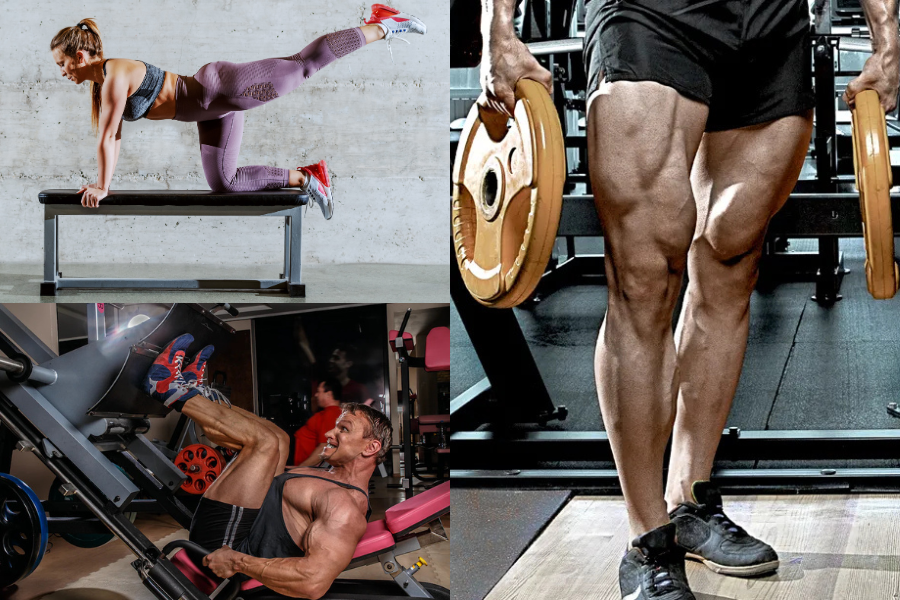
Whether you are new to working out or you already train your legs regularly, discovering the best quad exercises can transform your lower-body strength. Your quadriceps—those four muscles in your thigh—drive everyday movements like walking and climbing stairs, and play a vital role in running faster and jumping higher. By focusing on targeted exercises, you can build solid quads that improve your overall fitness and help protect your knees from injury. Below, you will learn why stronger quads matter, then dive into ten of the most effective exercises to challenge these powerful muscles.
Why strengthen your quadriceps
Your quads are the large muscle group in the front of your thigh, made up of four distinct muscles: the rectus femoris, vastus lateralis, vastus medialis, and vastus intermedius. Together, these muscles power both knee extension and hip flexion. Without adequate quad strength, your knees can feel unstable, and your sports performance may stall.
- Better balance and stability. Strong quadriceps help you stay grounded and reduce the risk of wobbly landings or stumbles. In exercises like lunges and split squats, your quads act as stabilizing forces.
- Faster sprint starts. Research indicates that explosive quad strength is integral to propelling you powerfully out of the blocks, especially during the first 20 meters of acceleration [1].
- Injury prevention. Quad imbalances can lead to knee issues. Engaging all four quadriceps muscles balances your thigh strength, which helps stabilize the knee joint and minimize stress in daily movements.
- Daily movement support. From climbing stairs to carrying groceries, your quads work tirelessly to keep you moving smoothly. Strengthening them makes everyday tasks feel easier.
Below, you will find ten exercises that target each area of the quadriceps and help build a strong, balanced lower body. Most of these are versatile, meaning you can modify depth, add weights, or adjust your stance to fit your fitness level.
10 best quad exercises
1. Bodyweight squats
Bodyweight squats are a core movement for building quad strength and teaching good squat form. Even though you are not using external weight here, you will feel your quads work hard to stabilize and power your body.
How to do it:
- Stand with feet about shoulder-width apart.
- Engage your core, keep your chest up, and lower yourself as if you are sitting in a chair.
- Aim for your thighs to be parallel to the ground before pushing back up.
Why it helps:
- Great for beginners who want to master squat mechanics.
- Requires no equipment, making it easy to include in any workout or warm-up.
- Works the entire lower body while honing your squat technique.
Variation tip: If you are just beginning, reduce the squat depth. If you want added difficulty, pause for a second or two at the bottom of each rep. Bodyweight squats can also evolve into squat jumps, which provide an extra power challenge for your quads [2].
2. Bulgarian split squats
Bulgarian split squats remain a staple for boosting quad development on each leg independently. One foot is placed behind you on a bench or box, forcing the front leg to handle most of the load.
How to do it:
- Stand a couple of feet in front of a bench.
- Place the top of one foot on the bench behind you, keeping your torso upright.
- Slowly lower your hips until your front thigh is parallel to the floor, then push back up through your front foot.
Why it helps:
- Focuses on unilateral strength, helping you correct leg-to-leg differences.
- Targets the quads, hamstrings, and hips in a single, compound motion.
- Emphasizes knee and hip stabilization more than standard squats [2].
Variation tip: If you are a beginner, keep the stance shorter and limit your depth. More advanced lifters can add dumbbells or a barbell to increase resistance.
3. Walking lunges
Walking lunges are a dynamic way to challenge your quads, glutes, and core. Each step forward forces your quads to bear your bodyweight and propel you ahead.
How to do it:
- Stand tall with feet together, core braced.
- Step forward with your right foot and lower into a lunge until both legs form roughly 90-degree angles.
- Push through your right foot to bring your left foot forward, then repeat on the other side.
Why it helps:
- Trains balance and coordination while strengthening quads, hamstrings, and core.
- Can be made more challenging by holding dumbbells or increasing your walking distance.
- Prepares you for many real-life activities, from climbing stairs to quick sprints.
You can progress by increasing the length of your lunge stride or performing heavier weighted versions. According to some studies, walking lunges effectively boost leg and core strength [2].
4. Leg press with low foot placement
If you have access to a leg press machine, placing your feet lower on the platform emphasizes your quads by increasing knee flexion and minimizing hip involvement.
How to do it:
- Adjust the seat so your knees start bent at around 90 degrees.
- Place your feet toward the lower edge of the platform, hip-width apart.
- Press the platform away, making sure not to lock out your knees at the top.
Why it helps:
- Encourages consistent knee tracking over your toes, which activates your quads more directly.
- Supports your back throughout the range of motion, allowing you to load more weight safely.
- Great for isolating the quads when you really want to feel that burn [3].
Modification: You can strengthen each leg individually with single-leg presses to address potential strength imbalances.
5. Leg extensions
Leg extensions are a pure isolation exercise for your quads. Because the movement primarily hinges at the knee, you can truly focus on each contraction.
How to do it:
- Sit on a leg extension machine, knees bent at about 90 degrees.
- Select a manageable weight to maintain good form.
- Extend your legs until they are almost straight, then slowly lower back.
Why it helps:
- Targets only the quadriceps and minimizes other muscle involvement.
- Easier to recover from than some compound exercises, often allowing more frequent training.
- Helps you zero in on the rectus femoris and smooth out quad imbalances [3].
If you feel any knee discomfort, lighten the load or reduce your top range of motion. Short, controlled reps protect the joint and effectively build strength.
6. Barbell front squats
Barbell front squats shift the load to the front of your body, demanding an upright torso that magnifies quad engagement. This variation is often praised for reducing lower back strain compared to back squats, though it can feel challenging on your core and upper body.
How to do it:
- Stand with your feet about shoulder-width apart and rest the barbell across your shoulders (often referred to as the “front rack” position).
- Keep your elbows high and chest up.
- Descend into a squat, stopping once your thighs are about parallel to the floor, then drive back up.
Why it helps:
- Forces your quads to fire more than in traditional back squats due to less hip hinge.
- Reinforces better posture and core stability.
- Particularly helpful for sprinters who need to improve drive phase power [1].
Beginners should start with an empty bar or lighter weights. Work on mastering the rack position and keeping your movements smooth.
7. Heel-elevated goblet squats
This beginner-friendly variation uses a kettlebell or dumbbell held in front of your chest and typically involves elevating your heels on a small plate. This position shifts more emphasis to your quadriceps by allowing deeper knee flexion.
How to do it:
- Position two small plates or a wedge under your heels.
- Hold a kettlebell close to your chest, elbows softly tucked in.
- Slowly squat down, letting your knees track over your toes while maintaining an upright torso.
Why it helps:
- Alleviates stress on the ankles and helps you squat deeper.
- Teaches you how to keep your trunk upright throughout the squat.
- Great for isolating your quads while sparing your lower back [3].
Focus on a steady tempo—pause slightly at the bottom, then push through your quads to rise back up. If you struggle with standard squats, the goblet position can assist with balance.
8. Hack squats
A hack squat machine can be your best friend if you want to hone in on your quads with ample support for your back. The angled sled forces your quads to work hard through a full range of motion, especially if you place your feet slightly lower on the plate.
How to do it:
- Position your back firmly against the pad of the hack squat machine.
- Place your feet shoulder-width apart on the platform, slightly lower for more quad emphasis.
- Unlock the safety bars and lower the sled until your thighs are around parallel to the floor, then press back up.
Why it helps:
- Emphasizes deep knee flexion, crucial for maximizing quad activation.
- The fixed track and shoulder pads support your torso, allowing you to handle heavier loads.
- Especially popular with bodybuilders for building size in the front of the thigh [4].
Work in a controlled manner. If you want to customize the movement, experiment with foot placement width and see how it targets different parts of your quads.
9. Step-ups
Step-ups are a functional exercise that translates directly into daily life activities like climbing stairs. They also strengthen your quads, hamstrings, and glutes simultaneously.
How to do it:
- Stand in front of a stable bench or platform at about knee height (or lower if you are a beginner).
- Step your right foot up on the platform, driving through your right heel to lift your body up.
- Return to the starting position and repeat with the left foot.
Why it helps:
- Enhances basic functional movement patterns, boosting your everyday strength.
- Can be modified with higher platforms or extra resistance like dumbbells.
- Challenges core stability and balance as you shift weight from one leg to the other [5].
Aim for smooth, deliberate reps. Keep your torso tall, and avoid using momentum. This ensures that your quads do most of the work.
10. Sissy squats
Sissy squats push knee flexion to extremes, making them a more advanced but highly effective exercise for isolating the front of your thighs. You can hold onto a support for balance, especially if you are new to sissy squats.
How to do it:
- Stand with feet hip-width apart. Optionally hold a stable rail or bar.
- Rise onto your toes and lean your upper body back while bending your knees forward.
- Keep hips extended and your body in a fairly straight line from knees to shoulders.
Why it helps:
- Unique positioning amplifies the stretch and contraction in your quads.
- Builds profound knee strength and stability, provided you have no underlying knee issues.
- Maximizes focus on your quadriceps by limiting hips and glutes [3].
If you are not comfortable with going too low, reduce the range of motion until you build more confidence. Sissy squats are a specialized move—approach them carefully.
Practical tips for safe progress
You have a menu of exercises to charge up your quads, but progression and safety matter just as much for building sustainable strength. Here are a few suggestions:
- Work your quads twice a week. Research and experts suggest aiming for two sessions per week, with at least two quad exercises each time [3]. Space these sessions at least 48 hours apart to allow muscle recovery.
- Control your depth. Some exercises, such as Bulgarian split squats or sissy squats, can put extra stress on your knees if you are not ready. Gradually increase your range of motion to avoid joint discomfort or injury.
- Adjust weight and reps mindfully. You can follow a hypertrophy range of about 8-12 reps and 10 or more total sets per week for growth. If you are a beginner, start with lighter loads and fewer sets, then build up as you get stronger.
- Keep your knees in line. During movements like lunges or squats, ensure your knee tracks over, not beyond, your toes. Proper alignment helps direct the tension to your quads while protecting your knees.
- Don’t skip unilateral work. Exercises like Bulgarian split squats and step-ups can reveal muscle differences between legs. Addressing these imbalances prevents potential injuries and promotes overall athletic performance.
- Mix compound and isolation exercises. Compound moves (front squats, hack squats, lunges) build overall strength, while isolation exercises (leg extensions) polish those details. A diverse routine extends your progress.
A final note on technique: By staying aware of your joint alignment and posture, you will recruit the right muscles and prevent issues from creeping in. If possible, ask a trainer or experienced friend to check your form, especially when you add heavier weights.
Conclusion
Building strong quads is about more than just aesthetics. It fuels powerful sprints, stable knees, and everyday functional ease. When you blend these ten best quad exercises into your routine—bodyweight squats, Bulgarian split squats, walking lunges, leg presses, leg extensions, front squats, heel-elevated goblet squats, hack squats, step-ups, and sissy squats—you cover every angle of muscle development. Each one emphasizes a different slice of your quadriceps, and staying consistent with two focused sessions a week will bring the most balanced gains.
Start with the exercises that feel accessible to you, fine-tune your depth and form, then add new movements or heavier weights as you grow stronger. The data on how these moves improve speed, stability, and performance is hard to ignore. Strengthening your quadriceps truly can be a game-changer for your entire lower body. Commit to those small weekly progressions, and get ready to see—and feel—real results in the gym, on the track, or just climbing the stairs at home.
References
- (Garage Strength)
- (Healthline)
- (Gymshark)
- (Reddit)
- (Verywell Health)