Why tricep pushdown variations matter
If you want bigger, stronger arms, tricep pushdown variations deserve a permanent spot in your workouts. The triceps make up a large portion of your upper arm, and by changing the attachment, grip, and body position, you can shift emphasis between the long, medial, and lateral heads for better overall growth.
You can do tricep pushdowns with different cable attachments, or even with resistance bands at home, so this exercise fits almost any setup and fitness level. Below you will learn what each variation does, which muscles it highlights, and how to pick the ones that match your goals.
Get the basic tricep pushdown right
Before you start tweaking variations, dial in your form. Proper technique keeps the stress on your triceps and off your elbows and shoulders.
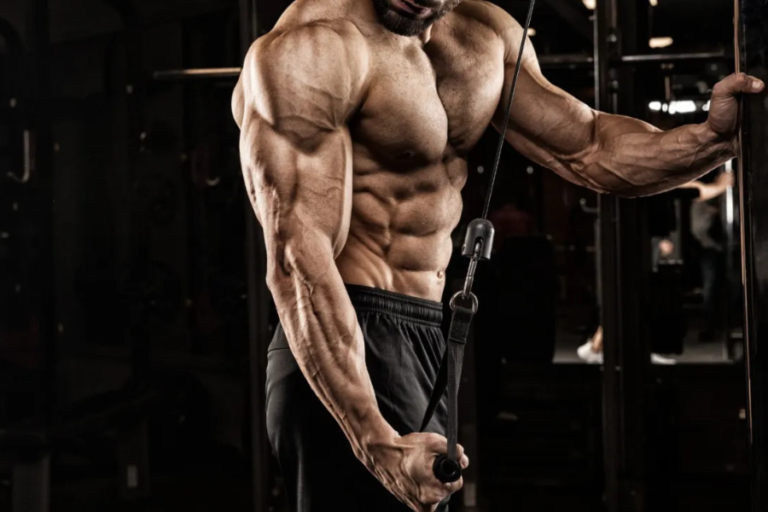
Standard cable tricep pushdown
You can use a straight bar, V-bar, EZ bar, or rope for this basic version.
- Set the pulley at or above head height.
- Stand facing the stack and grab the attachment with an overhand grip.
- Tuck your elbows tight to your sides and take a small step back.
- Start with your forearms roughly parallel to the floor.
- Push the handle down by extending your elbows until your arms are straight.
- Pause briefly at the bottom and squeeze your triceps.
- Control the weight back up until your forearms are about parallel, then repeat.
Form tips:
- Keep your elbows locked close to your torso rather than letting them flare out.
- Avoid using your hips or upper body to swing the weight.
- Use a slow, controlled tempo so the triceps do the work, not momentum.
Once you have this dialed in, you are ready to explore specific tricep pushdown variations to target different areas and manage joint stress.
Rope tricep pushdown variations
Rope attachments are very popular for pushdowns and for good reason. The rope gives your wrists more freedom to rotate, which often feels more natural than a fixed bar.
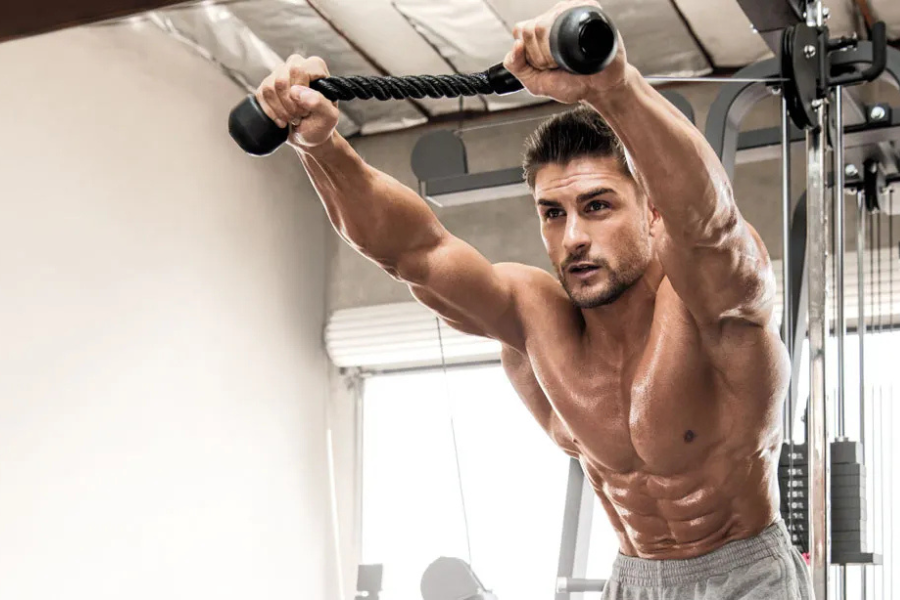
Standard rope pushdown
With the rope, your hands start close together with a neutral grip, palms facing each other. As you push down, you separate the ends of the rope and slightly turn your hands out.
Benefits:
- Allows a longer range of motion because you can spread the rope at the bottom.
- The neutral grip can reduce elbow and wrist discomfort compared with a straight bar.
- Many lifters feel strong activation in the lateral head when they push down and slightly out.
How to make it more effective:
- Think about pulling the rope “down and apart” in a smooth arc.
- Do not let the weight pull your shoulders forward at the top.
- Pause for a second at the bottom with the rope fully separated.
Single-arm rope or handle pushdown
If your cable has a detachable rope end or single D-handle, you can work one arm at a time.
Why you might use it:
- Helps correct left to right strength imbalances.
- Makes it easier to focus on the mind muscle connection.
- Lets you slightly adjust elbow and shoulder position for comfort.
You can do this with a neutral grip, or experiment with slight inward or outward rotation to find the angle that feels strongest in your triceps.
Rope pushdowns with bands at home
No cable stack at home? You can mimic rope style pushdowns using resistance bands.
- Anchor a band high on a sturdy structure or pull up bar.
- Hold each end of the band like a rope.
- Step back to create tension, then perform pushdowns as usual.
Bands provide variable resistance that matches the strength curve of the triceps, lighter at the top and heavier at the bottom, and they can be very joint friendly if cables irritate your elbows.
Bar tricep pushdown variations
Bars change your grip angle and often let you load more weight. The trade off is less wrist freedom, so attachment choice becomes important.
Straight bar pushdown
With a straight bar you typically use an overhand, shoulder width grip.
Pros:
- Simple to set up in almost any gym.
- Direct, strong feeling contraction in the triceps.
- Allows heavy loading if your joints tolerate it.
Cons:
- Can cause wrist strain or even issues like tennis elbow if your grip angle does not suit your structure.
- Encourages some people to cheat with momentum because the setup feels stable.
To make the straight bar friendlier:
- Use a grip width that keeps your wrists in line with your forearms.
- Do not lock your wrists into extreme extension.
- Use moderate weight and smooth reps.
Reverse grip tricep pushdown (underhand)
The reverse grip tricep pushdown is a powerful variation that flips your grip underhand to change which muscles do the most work.
Set up:
- Attach a straight bar or rope to the high pulley.
- Grab the bar with your palms facing up, slightly narrower than shoulder width.
- Tuck your elbows to your sides and keep your chest tall.
- Extend your elbows to push the bar down, pause at full lockout, then return under control.
Key benefits based on available guides and expert breakdowns:
- Primarily targets the medial head of your triceps, the less visible head that gives thickness and stability to the arm.
- Helps keep your elbows tucked close to your body, which improves isolation.
- Reduces forearm involvement and can lower elbow stress compared with an overhand grip.
- Engages stabilizing muscles such as your lats, abs, obliques, pecs, and traps to keep your posture steady during the movement.
This variation is often described as more “compound” than a standard pushdown because of the extra stabilizer work, and it can support strength gains in bigger lifts where triceps play a role, such as pressing exercises.
Programming suggestions:
- Use 3 to 4 sets of 8 to 12 reps.
- Expect to use less weight than in the standard pushdown because the underhand grip is more demanding.
- Focus on smooth, controlled reps and a strong squeeze at the bottom.
If you notice wrist discomfort using an underhand grip on a rigid bar, you can:
- Swap to resistance bands anchored high, so your wrists can find their own angle.
- Use two separate handles on a dual pulley and cross them in front of you, which lets each hand rotate more freely and still keeps your elbows close.
V-bar pushdown
The V-bar provides a semi neutral grip that many lifters find more comfortable than the straight bar.
Why you might like it:
- The angled shape reduces wrist strain compared with a flat bar.
- Great for heavy pushdowns if your goal is maximum overload.
- Feels very stable, which can help you concentrate on driving through the full range of motion.
If you prefer lifting heavy but your wrists hate straight bars, the V-bar can be a good compromise.
EZ bar pushdown
The EZ attachment has multiple angled sections so you can pick a grip that matches your natural hand and forearm position.
Benefits:
- Offers varied hand positions to find what feels best.
- With pronated hands, you can shift emphasis to the medial and long heads of the triceps.
- Tend to be easier on the wrists than straight bars.
You can also experiment with a semi underhand grip on the inner curves to see how that affects your triceps engagement.
Specialty attachment pushdown variations
Some cable attachments are designed with ergonomics and overload in mind. If your gym has them, they can add new angles and sensations to your tricep pushdown variations.
Ergonomic handle pushdowns
Ergonomic handles such as the GymPin Ergo Handles have a contoured shape and a stopper at the end for secure hand placement. As of late 2025, many lifters rate them highly for triceps work because:
- The hand shape feels natural and reduces the urge to grip too hard.
- End stoppers prevent slipping, so you can focus on pushing instead of holding on.
- They are versatile for different triceps movements, including overhead and crossbody extensions.
- You can connect two handles using a daisy chain to achieve full arm extension for pushdowns and similar exercises.
If your wrists or elbows complain with traditional bars, these ergonomically shaped handles are worth trying.
Fat handle triceps bar pushdowns
Some specialty bars, such as the TK Star Larry Scott Triceps Bar, come with a fatter handle diameter and carefully chosen angles.
General benefits of this style:
- The thicker grip spreads pressure across your palm and fingers.
- Knurling improves grip without requiring a death squeeze.
- Carefully designed angles can keep your wrists in a neutral, powerful position during pushdowns.
These bars are often handmade, expensive, and sometimes on waitlists, so you may not see them in every gym. If you do, think of them as a premium option for heavier or more comfortable pushdowns.
Palm press style pushdowns
Wide paddle attachments such as the MAG Palm Press allow you to push with your palms instead of wrapping your fingers around a bar.
Advantages:
- Large, flat surface can feel very solid for heavy pushdowns.
- Guiding nubs help keep your hands in place.
- The design encourages you to drive through the heel of your palm, which can create a very strong contraction.
Potential drawback:
- If your wrist mobility is limited, this shape can feel awkward and may cause some discomfort. Start light and see how your joints respond.
Butterfly style cable pushdowns
Attachments like the Troy VTX Butterfly create a hybrid between rope freedom and bar stability.
- They allow some wrist rotation for comfort.
- The range of motion is more limited than with top tier ergonomic options, so you might not get as much stretch or lockout.
You can still use these for variety or if they are the only ergonomic style available at your gym, but they may not become your primary choice if you have access to more refined handles.
Single arm and unilateral tricep pushdown variations
Training each arm independently is one of the simplest but most effective tricep pushdown variations you can add.
Unilateral reverse grip pushdowns
Using one handle at a time, you can perform single arm reverse grip pushdowns.
Benefits:
- Excellent for addressing muscle imbalances between arms.
- Improves your mind muscle connection because you can focus solely on one triceps at a time.
- Makes it easier to find a shoulder and elbow position that feels natural.
Set up similarly to the two arm version, but stand slightly offset so the working shoulder lines up with the cable.
Alternating pushdowns
You can also alternate arms from rep to rep or set to set.
- Do 8 to 12 reps on the right arm, then switch to the left.
- Or alternate single reps back and forth if your machine allows quick changes.
This approach keeps overall workout time reasonable while still giving each arm dedicated attention.
Using resistance bands for pushdowns
If you train at home or travel often, resistance bands can keep tricep pushdown variations in your routine.
High anchor band pushdowns
- Loop a band over a pull up bar, door anchor, or sturdy beam.
- Grab the band ends with an overhand or neutral grip.
- Step back to create tension and perform pushdowns as you would on a cable.
Why bands can be useful:
- Resistance increases as the band stretches, which follows the natural strength curve of the triceps.
- Easy to adjust difficulty by stepping further back or using thicker bands.
- Gentle on joints while still providing a solid burn.
Underhand band pushdowns
To mimic the reverse grip benefits with less wrist stress:
- Hold the band underhand with each hand or use handles attached to the band.
- Keep your elbows tight to your sides and push down while letting your wrists rotate slightly as needed.
If a rigid bar bothers your wrists in the underhand position, this is a practical workaround that still encourages good elbow positioning and long head activation.
How to choose the right tricep pushdown variations
You do not need every variation in one workout. Instead, rotate through a smaller set that fits your joints and goals.
Match variations to your goals
If you want:
-
Overall mass and strength
Use heavier friendly options like the V-bar pushdown, ergonomic handle pushdowns, or fat handle specialty bars. Keep reps in the 6 to 10 range. -
Better detail and medial head development
Include reverse grip tricep pushdowns with an underhand grip for 8 to 12 reps, plus standard rope pushdowns with a long range of motion. -
Joint friendly training
Lean toward rope pushdowns, ergonomic handles, or band pushdowns. Use moderate loads and controlled reps. -
Fixing imbalances
Add single arm rope or handle pushdowns and unilateral reverse grip pushdowns. Focus on equal reps and controlled tempo on both sides.
Sample tricep pushdown focused finisher
You can plug this into the end of an upper body or push day:
- Rope pushdown
- 3 sets of 10 to 12 reps
- Focus on stretching at the top and separating the rope at the bottom
- Reverse grip tricep pushdown
- 3 sets of 8 to 10 reps
- Lighter weight, strong squeeze, elbows glued to your sides
- Single arm rope or handle pushdown
- 2 sets of 10 to 12 reps per arm
- Slow negatives and full lockout
Rest 45 to 60 seconds between sets to keep tension high.
Technique reminders for safer, stronger triceps
Whatever tricep pushdown variations you choose, a few fundamentals stay the same:
- Keep elbows close to your torso to avoid excessive shoulder involvement.
- Use a full but controlled range of motion without letting your shoulders roll forward.
- Choose a weight that lets you feel your triceps working instead of your chest, shoulders, or lower back.
- Rotate between rope, bar, and band options over time to avoid overuse issues and boredom.
By mixing these tricep pushdown variations into your routine, you give each head of the triceps a chance to shine, while keeping your joints happier and your workouts more engaging. Start by perfecting one or two variations, then gradually layer in others as you get stronger and more comfortable.