
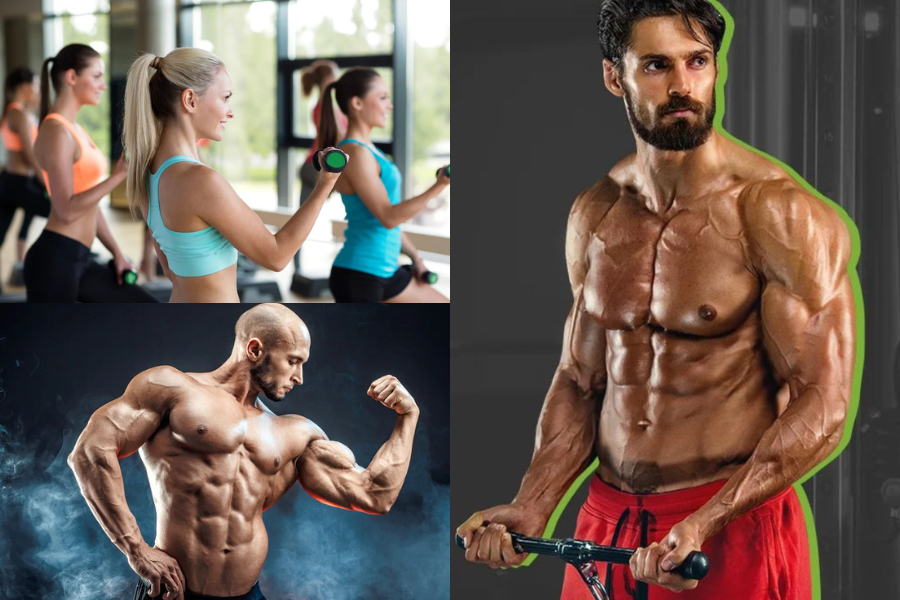
Discover the best bicep exercises
If you want upper arms that stand out, choosing the best bicep exercises is key. Strong biceps give you a solid foundation for everyday tasks like lifting grocery bags, carrying kids, or pushing heavy doors. They also help improve posture, stabilize your shoulders, and make your entire arm visibly more defined. The good news is, you do not have to spend hours in the gym trying random arm workouts. By focusing on proven exercises and proper form, you can build biceps that pop while avoiding injury.
In this guide, you will find 10 highly effective exercises backed by research, expert trainers, and fitness communities. Whether you prefer classic free-weight movements, cable work, or no-equipment bodyweight variations at home, there is something here that fits your style. Each exercise hits crucial parts of your biceps, so you can develop both the long head (which defines your arm’s “peak”) and the short head (which makes your arms look thicker). Let’s dig in step by step.
Understand your biceps
Your biceps brachii consists of two main sections: the long head and the short head. The long head is located on the outside of your upper arm. It is largely responsible for that high, rounded “peak” that people often associate with strong biceps. The short head sits more to the inside of your arm near your chest. It provides width and thickness, helping your upper arm look full from any angle.
- Long head: Often targeted by hammer curls, chin-ups, and exercises that emphasize a wider grip or neutral grip.
- Short head: Emphasized in concentration curls and preacher curls, where the arms are pinned and movement is strictly controlled.
When you train both heads regularly, you will gain balanced, well-rounded size and strength. According to a 2024 roundup by Gymshark, mixing exercises that isolate each head—plus compound moves like chin-ups—builds biceps that are not just strong but also impressively shaped [1].
Essential training principles
Before you jump to the individual exercises, keep these foundational tips in mind:
-
Train with the right frequency. Research cited by Gymshark suggests that working your biceps two or three times per week can lead to about 3.1% more muscle growth on a weekly basis, compared to only hitting them once a week. This increased frequency allows you to stimulate—and then recover—your biceps more often.
-
Always warm up. A quick warm-up primes your muscles, tendons, and joints, reducing risk of tweaks and strains. Rob Riches recommends activities like banded chin-ups, rotational dumbbell curls, and gentle stretches behind the back to boost blood flow in about five minutes [2].
-
Pick weights wisely. According to Verywell Fit, you want a dumbbell or barbell weight that you can lift 10 times with good form, where the last few reps truly challenge you. Over time, gradually increase weight or add more reps to stimulate further muscle growth [3].
-
Use good form. Common slip-ups include swinging your torso, lifting your elbows away from your sides, or rushing the movement. These habits reduce tension on your biceps and may stress your shoulders or back instead. An online fitness community on Reddit highlighted a debate about whether to keep your elbows perfectly still or allow some natural movement. Both methods can work your biceps effectively, so experiment with what feels comfortable and helps you engage the muscle fully [4].
-
Explore multiple variations. Rotating through different grips—like neutral (hammer), supinated (palms facing up), or pronated (palms facing down)—keeps your workouts fresh and challenges different parts of your arm. The variety also helps avoid overuse injuries while offering a new stimulus.
When you bring these principles together, you set the stage for real progress. Ready to see which exercises pack the biggest punch?
10 best bicep exercises
1. Seated dumbbell curls
When it comes to zeroing in on pure bicep isolation, many trainers rank seated dumbbell curls among the best bicep exercises. Rob Riches places them only second to barbell curls for sheer effectiveness [2].
- How to do it:
- Sit on a bench with your back supported or at least upright.
- Hold a dumbbell in each hand, palms facing forward, arms fully extended by your sides.
- Keeping your elbows stationary, curl the weights toward your shoulders in a controlled motion.
- Squeeze your biceps at the top, then slowly lower the weights.
- Why it works: Sitting reduces momentum, forcing your biceps to do the lift rather than letting your back or legs assist. This focus helps you develop mind-muscle connection.
- Reps and sets: Rob Riches suggests 3 sets of 12–10 reps, making the last few reps challenging.
2. Standing barbell or EZ bar curls
Standing barbell curls load both biceps simultaneously. They are a top choice for building overall mass, especially if you want to lift heavier. If you prefer an angled grip that eases wrist strain, use an EZ bar.
- How to do it:
- Stand with the barbell in your hands, palms facing forward. Feet should be hip-width apart.
- Keep your elbows near your torso and your core tight.
- Curl the bar upward, focusing on contracting your biceps.
- Pause briefly at the top, lower the bar slowly.
- Why it works: A barbell allows you to handle bigger loads, which sparks significant muscle hypertrophy. According to a May 2024 report by NutroOne, curl barbells can help you steadily add weight and place more tension on your biceps [5].
- Reps and sets: Aim for 3 sets of 10–8 reps as recommended by Rob Riches. Focus on strict form.
3. Single arm preacher curls
Preacher curls are perfect for isolating the short head of the biceps, and working one arm at a time addresses any strength imbalances.
- How to do it:
- Sit at a preacher curl station or use an incline bench. Extend one arm so that your triceps rest against the pad.
- Curl the dumbbell upward until your forearm is vertical.
- Lower slowly to the starting position, keeping tension in the bicep.
- Why it works: With your entire upper arm braced against a pad, you cannot rely on momentum or shift your elbow. Single arm training also helps correct one-sided weaknesses. Rob Riches notes 2–3 sets of 12–10 reps work best for targeting the short head [2].
4. Concentration curls
Named for the intense focus required, concentration curls rank among the most precise ways to grow your biceps, especially their short head. You effectively block out cheating by bracing your elbow against your inner thigh.
- How to do it:
- Sit on a bench or chair with your knees apart.
- Hold a dumbbell in one hand, rest your elbow against your inner thigh near the knee.
- Curl the weight up toward your shoulder in a slow, controlled manner.
- Lower it back down just as deliberately.
- Why it works: Because your leg stabilizes your elbow, you minimize using your shoulder or torso. Gymshark identified concentration curls as highly effective for building the short head in 2024 [1].
- Reps and sets: Shoot for 3–4 sets of 10–12 reps, focusing on a strong contraction at the top.
5. Hammer curls
Hammer curls shift your grip from a standard palms-up position to a neutral one. This move emphasizes the long head of the bicep as well as the brachialis and forearm muscles.
- How to do it:
- Stand tall with a dumbbell in each hand, palms facing your sides.
- Keep your elbows tucked in, curl the weights up toward your shoulders.
- Maintain a neutral wrist position without turning your palms up.
- Lower the weights slowly.
- Why it works: A neutral grip places more stress on the long head and also recruits the brachialis, giving your arm a thicker, stronger appearance. According to Gymshark, this approach supports balanced arm strength and complements other curls [1].
- Reps and sets: Aiming for 3 sets of 10–12 reps is common. If you want more challenge, try heavy hammer curls in the 8–10 rep range.
6. Chin-ups
Chin-ups are a compound exercise, meaning other muscles (like your back) also contribute, but they still rank as one of the best bicep exercises for overall arm and upper-body strength. A supinated grip (palms facing you) places plenty of tension on your biceps.
- How to do it:
- Grab a pull-up bar with your palms facing you, hands about shoulder-width apart.
- Start from a full hang, arms fully extended.
- Pull your body upward until your chin crosses the bar.
- Lower yourself with control back to a full hang.
- Why it works: Chin-ups are a closed-chain exercise that force your biceps to lift your entire body weight. Gymshark includes them among the top six exercises for building mass [1].
- Reps and sets: If you are new, aim for sets of 5–8 reps. If you can easily surpass 12, consider adding a weighted belt or using slower negatives to raise the difficulty.
7. Biceps push-ups
You might not associate push-ups with biceps, but a variation called biceps push-ups can shift more emphasis onto them. According to Marathon Handbook, turning your hands around for a reverse grip places your biceps in a more engaged position [6].
- How to do it:
- Start in a standard push-up position, but rotate your fingers outward or fully backward (if flexibility allows).
- Keep your elbows tucked close to your torso as you lower.
- Push up through your palms, focusing on squeezing your arms.
- Why it works: This rotation challenges the biceps more than a regular push-up, where your chest, shoulders, and triceps do most of the work. It is a great no-equipment move you can do anywhere.
- Reps and sets: Begin with 2–3 sets of as many reps as you can manage, keeping good control throughout.
8. Door frame body weight curls
For those looking to train at home without standard gym equipment, door frame curls can be a creative alternative. Instead of pulling a weight toward you, you pull your body toward the frame.
- How to do it:
- Find a sturdy door frame. Grip it with one or both hands so your palms face you.
- Lean back with your arms extended, feet planted firmly.
- Pull your upper body toward the door frame, bending your elbows to about 90 degrees or slightly more.
- Lower yourself slowly, using your arms to resist.
- Why it works: This bodyweight approach adds resistance based on how much you lean back. According to Marathon Handbook, it is an effective option for at-home bicep training without any dumbbells or bars [6].
- Reps and sets: 2–3 sets of 10–12 reps, adjusting your foot position to increase or decrease difficulty.
9. Inverted rows
Inverted rows primarily target your back, but they also recruit your biceps when you use an underhand or supinated grip. This move is a full upper-body builder that helps with grip strength too.
- How to do it:
- Position yourself under a low bar or a sturdy table that can support your weight.
- Take an underhand grip if possible for extra bicep emphasis.
- Keep your body straight as you pull your chest up toward the bar or table.
- Lower yourself carefully back to the starting position.
- Why it works: Marathon Handbook notes that rowing motions build a stronger back while still hitting the biceps. You activate multiple muscle groups at once, which improves overall functional strength [6].
- Reps and sets: Aim for 3 sets of 8–12. Adjust your leg placement or elevation to make them harder or easier.
10. Negative curls with household items
Eccentric training, or focusing on the lowering phase, can spark extra hypertrophy gains. Negative curls let you work on that lowering phase more deliberately, using objects you already have around the house.
- How to do it:
- Fill a milk jug, backpack, or similar container with enough weight to challenge you.
- Curl the weight up with both arms if needed, then transition to one arm to lower it slowly.
- Concentrate on a 3–5 second descent, feeling your biceps stretch under tension.
- Why it works: The eccentric portion of a curl is known for triggering strength and size gains, especially if you linger in that lowering phase. Marathon Handbook highlights negative curls as a valuable no-equipment or minimal-equipment strategy [6].
- Reps and sets: Try 2–3 sets of 8–10 negative reps, taking full advantage of that slow descent.
Optimize your training
Once you master these 10 best bicep exercises, you will want to optimize your routine for maximum growth and definition. Here are a few pointers to keep in mind:
- Combine isolation with compound moves. Exercises like concentration curls isolate the biceps, but do not skip compound lifts like barbell curls or chin-ups that force your body to work as a unit.
- Focus on progressive overload. Add a little more weight or one extra rep each week. Small, consistent jumps build momentum and reliably lead to new strength gains.
- Stay consistent. According to the Gymshark data, training your biceps two or three times a week helps you progress faster, but only if you adhere to a steady schedule [1].
- Mind your elbow positioning. While some trainers insist elbows should remain fixed to your sides, others argue slightly moving the arms can create a deeper stretch and contraction. Test both styles. Find the angle that keeps tension on your biceps and does not strain your shoulders.
- Warm up and cool down. A quick warm-up with band curls or light sets primes your arms to work efficiently. Once you finish, do some light stretching or foam rolling to reduce soreness and speed up recovery.
Final recap
Biceps are more than a showy muscle. They support your daily tasks, stabilize your lifts, and round out your upper-body strength. By blending tried-and-tested exercises—like seated dumbbell curls, barbell curls, preacher curls, and bodyweight variations—you cover all the bases and build impressive arms from multiple angles.
Here is a quick look at your 10 best bicep exercises:
- Seated dumbbell curls
- Standing barbell or EZ bar curls
- Single arm preacher curls
- Concentration curls
- Hammer curls
- Chin-ups
- Biceps push-ups
- Door frame body weight curls
- Inverted rows
- Negative curls with household items
Start by picking two or three exercises that match your goals and equipment. Then, aim to train your biceps two or three times weekly, keep your form dialed in, and add small doses of progressive overload. That combination will help you steadily build and sculpt your arms. You have all the research-based solutions you need to get started, and now it is up to you to take action. Grab your weights (or door frame), apply these principles, and watch your biceps rise to the challenge.
References
- (Gymshark)
- (Rob Riches)
- (Verywell Fit)
- (Reddit)
- (NutroOne)
- (Marathon Handbook)