

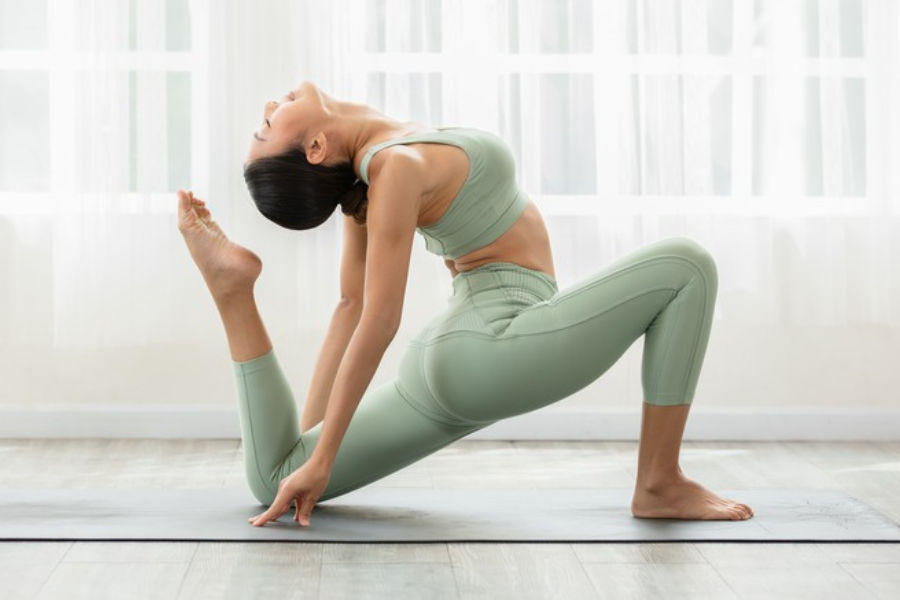
Poor posture affects more than how you look. It can lead to neck pain, back discomfort, tight hips, shallow breathing, and reduced core strength. Long hours of sitting, screen use, and repetitive movement patterns often pull the body out of alignment. Yoga offers a practical way to restore balance by strengthening postural muscles, improving mobility, and increasing body awareness.
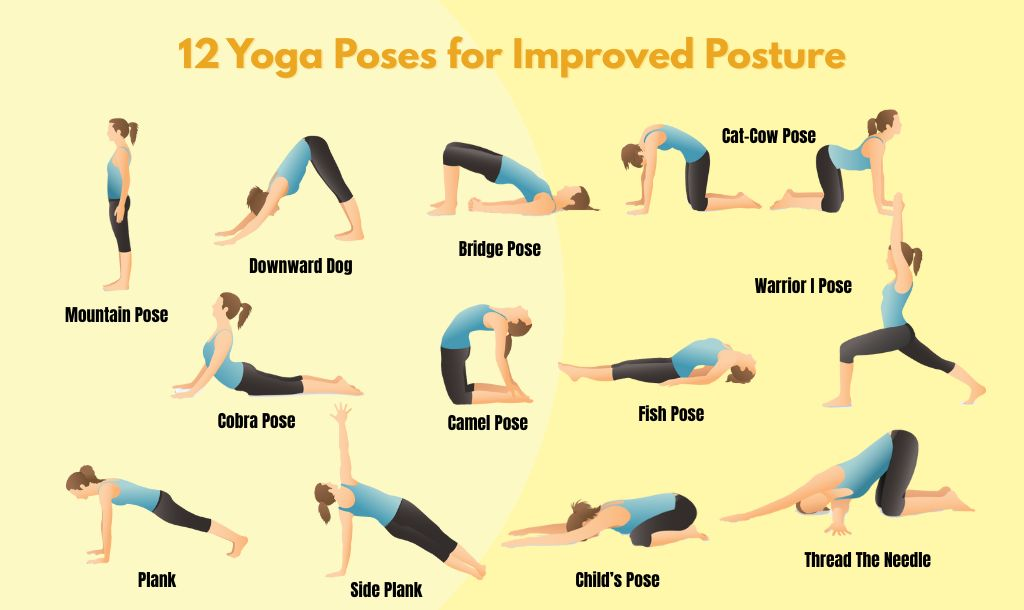
This article explores twelve yoga poses shown in the image and explains how each one supports better posture. Practicing these poses consistently can help you stand taller, sit with ease, and move with greater control throughout the day.
Why Yoga Improves Posture
Posture depends on strength, flexibility, and coordination. Weak core and back muscles allow the shoulders to round and the spine to collapse. Tight hip flexors and chest muscles pull the body forward. Yoga addresses both sides of the issue by strengthening what is weak and lengthening what is tight.
Yoga also improves proprioception, which is your ability to sense body position. As awareness increases, you begin to notice poor alignment and correct it naturally. Over time, this leads to lasting postural improvement rather than temporary fixes.
Standing and Foundational Poses
Mountain Pose
Mountain Pose may look simple, but it sets the foundation for all upright posture. Standing tall with feet grounded teaches proper spinal alignment from head to toe.
This pose trains you to stack the head over the shoulders, shoulders over hips, and hips over ankles. Engaging the core and legs while relaxing the shoulders builds awareness that carries into daily standing and walking habits.
Warrior I Pose
Warrior I strengthens the legs, hips, and core while opening the chest and shoulders. Raising the arms overhead encourages spinal extension and counters forward rounding.
This pose reinforces upright posture under load. Holding Warrior I improves endurance in the muscles that keep the torso tall and stable during movement.
Spine Mobility and Alignment
Cat-Cow Pose
Cat-Cow gently moves the spine through flexion and extension. This improves spinal mobility and reduces stiffness caused by prolonged sitting.
By coordinating breath with movement, Cat-Cow encourages awareness of spinal positioning. Improved mobility helps the spine settle into a more neutral posture when standing or sitting.
Cobra Pose
Cobra Pose strengthens the muscles along the spine while opening the chest and shoulders. It helps counteract slouching and forward head posture.
Practicing Cobra teaches controlled spinal extension without compression. This builds strength in the upper back and encourages a more upright chest position throughout the day.
Camel Pose
Camel Pose deeply opens the front of the body, including the chest, shoulders, and hip flexors. These areas often tighten and pull posture forward.
By strengthening the back muscles while stretching the front body, Camel Pose supports balanced posture. It also promotes confidence and improved breathing mechanics.
Strengthening the Core and Back
Plank Pose
Plank Pose builds core strength, which is essential for maintaining good posture. A strong core supports the spine and reduces strain on the lower back.
Holding Plank trains proper alignment under tension. The shoulders, hips, and heels remain in one line, reinforcing neutral posture during daily activities.
Side Plank Pose
Side Plank targets the obliques and lateral stabilizers of the spine. These muscles help prevent slouching and uneven weight distribution.
Improved side body strength supports symmetrical posture and reduces compensations that can lead to discomfort or imbalance.
Bridge Pose
Bridge Pose strengthens the glutes, lower back, and core while opening the hip flexors and chest. Weak glutes often contribute to poor pelvic alignment.
This pose promotes a neutral pelvis, which plays a key role in spinal posture. Strong hips support an upright torso and reduce lower back strain.
Stretching and Restorative Poses
Downward Dog
Downward Dog lengthens the spine while stretching the shoulders, hamstrings, and calves. It encourages spinal decompression and full-body alignment.
By pressing through the hands and lifting the hips, this pose reinforces awareness of spinal length and shoulder positioning.
Child’s Pose
Child’s Pose allows the spine to relax while gently stretching the back, hips, and shoulders. It provides relief from tension caused by poor posture habits.
This pose encourages mindful breathing into the back body, which supports relaxation and spinal health.
Fish Pose
Fish Pose opens the chest, neck, and shoulders while strengthening the upper back. It directly counters rounded shoulders and forward head posture.
Practicing Fish Pose improves chest expansion and breathing capacity. This helps the upper body remain open and upright during sitting and standing.
Thread the Needle
Thread the Needle targets the upper back and shoulders, areas that often tighten with desk work and phone use. It promotes gentle spinal rotation.
Improved thoracic mobility allows the spine to stack properly, reducing strain on the neck and lower back.
How to Practice These Poses for Best Results
Consistency matters more than intensity. Practicing these poses three to five times per week can lead to noticeable changes in posture. Focus on slow, controlled movement and steady breathing.
Hold strengthening poses for 20 to 40 seconds and repeat two to three times. Stretching and mobility poses can be held longer, especially if tension is present. Always prioritize proper alignment over depth.
Integrating Posture Awareness into Daily Life
Yoga works best when its principles extend beyond the mat. Notice how you sit at your desk, stand in line, or walk throughout the day. Engage the core lightly, relax the shoulders, and align the head over the spine.
Short posture check-ins during the day reinforce the benefits gained from yoga practice. Over time, upright alignment becomes the default rather than a conscious effort.
Long-Term Benefits of Better Posture
Improved posture reduces muscle strain, enhances breathing, and supports joint health. It can also improve confidence and energy levels. Yoga-based posture work supports long-term spinal health by balancing strength and mobility.
With regular practice, these twelve poses help retrain the body to move and rest in healthier positions, leading to lasting improvements in comfort and function.