

Whether your goal is bigger arms or better overall upper-body strength, focusing on the best tricep exercises will take you far. Triceps make up a substantial part of your arm mass, and training them properly strengthens your pressing power for movements like push-ups, bench presses, and overhead lifts. Maybe you want more definition, or perhaps you simply want to make everyday tasks like lifting groceries and moving a computer mouse feel easier. Regardless, strong triceps help. Below, you will find 10 tricep exercises that target all three heads of your triceps—long, lateral, and medial—to maximize your results.
Before you jump in, take a moment to warm up by doing dynamic arm circles or light band work. This helps prepare your triceps and shoulders and prevents injuries. Prioritize form above all else: keep your shoulders stable, elbows tucked, and your core engaged for each exercise. From beginner-friendly bodyweight moves at home to dumbbell classics in the gym, here are 10 exercises worth adding to your routine.
Try tricep dips
Tricep dips, also known as chair dips, are often hailed as “the king of bodyweight tricep exercises.” They isolate your arms while recruiting your shoulders, core, and back to keep you stable and balanced. If you are new to dips, start with a sturdy chair, bench, or low table.
- Setup: Sit on the edge of the chair with your palms on the seat, fingers pointed forward. Walk your feet out until your body is just off the chair, then straighten your arms.
- Action: Bend your elbows and lower yourself until your upper arms are almost parallel to the floor. Push back up while keeping elbows tucked in.
- Tips: Keep your shoulders pulled back to avoid hunching, and avoid dipping too low. If you have shoulder or elbow sensitivities, consider limiting the range of motion or trying push-ups instead.
According to a 2024 article by Men’s Health UK, dips target multiple heads of the triceps, with a special emphasis on the long head, which can help produce that coveted horseshoe-shaped definition [1]. If you want to progress further, elevate your feet or switch to parallel bar dips at the gym.
Do diamond push-ups
Diamond push-ups are a classic upper-body exercise that zeroes in on your triceps. By placing your hands close together—so that your thumbs and index fingers form a triangle—you emphasize the lateral and medial heads alongside the chest and shoulders.
- Setup: Get into a standard push-up position with your hands directly under your chest. Position your thumbs and index fingers so they touch, creating a diamond shape.
- Action: Keep your body in a straight line from shoulders to heels. Lower your chest until it’s just above your hands, then press back up.
- Tips: If it’s too challenging, try them on your knees or at an incline with your hands on a chair or bench.
Diamond push-ups are popular in bodyweight routines because they’re accessible while still being tough. They also help prepare you for advanced moves, like close-grip barbell bench presses. If you feel wrist pressure, widen your hand position slightly or use push-up handles.
Perform overhead dumbbell extension
If you want to emphasize the long head of your triceps, overhead exercises are your friend. The overhead dumbbell extension extends your arms behind your head, creating a stretch in the triceps that many find especially effective for muscle development.
- Setup: Grab one or two dumbbells. Stand or sit upright, core engaged, and hold the weight overhead with your elbows by your ears.
- Action: Slowly lower the dumbbell(s) behind your head until your forearms are roughly parallel to the floor. Press back to the starting position, keeping your elbows as close to your head as possible.
- Tips: Use a moderate weight at first. Engage your core so you do not overarch your lower back.
Research from Gymshark highlights that overhead extensions hit the long head particularly well, contributing to overall mass and strength in your upper arms [2]. Aim for 8-12 reps at 60-80% of your one-rep max, focusing on smooth movements rather than speed.
Master skull crushers
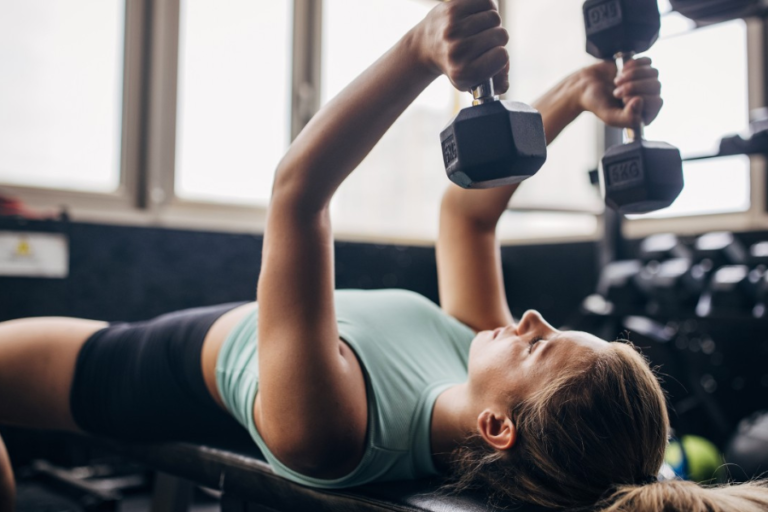
Skull crushers—often called lying tricep extensions—are a staple for developing bigger, stronger triceps. You can use an EZ bar, dumbbells, or even a straight bar. The key is to track your elbows properly and avoid flaring them out wide.
- Setup: Lie face up on a bench or floor, holding the bar or dumbbells with arms fully extended above your chest.
- Action: Keeping your elbows stationary, bend them to lower the weight toward your forehead or just behind your head. Reverse the motion and extend your arms back to start.
- Tips: Move slowly and deliberately. Keep your upper arms perpendicular to the floor.
EZ Bar skullcrushers target every tricep head but especially emphasize the long head when you move the weight behind your head. According to Muscle & Strength, skullcrushers are one of the best moves to isolate your triceps from shoulders and chest involvement [3].
Include close-grip bench press
The close-grip bench press is a proven compound lift that recruits your triceps more than a standard bench press. You can perform it with dumbbells or a barbell, and it makes a great complement to purely isolated moves like dips or cable pressdowns.
- Setup: Lie on the bench holding the bar (or dumbbells) with your hands or grips closer than shoulder-width apart—usually around hip-width.
- Action: Unrack the weight, lower it slowly to your chest, and then press back up. Keep your elbows tucked close to your torso.
- Tips: Avoid an extremely narrow grip to protect your wrists. Even a slightly narrower grip than normal can emphasize the triceps.
According to Planet Fitness resources, close-grip moves help beginners improve their bench technique while hitting triceps well [4]. This lift also helps you transition to heavier overhead presses.
Add dumbbell kickbacks
Dumbbell kickbacks are a classic isolation exercise that effectively targets the medial and lateral tricep heads. They keep constant tension on the arms, especially if you avoid swinging your torso.
- Setup: Hold a dumbbell in one hand. Hinge forward at the hips with a straight back, bending your knees slightly. Keep your upper arm tucked at your side, elbow bent.
- Action: Extend your elbow to straighten your arm behind you, then return slowly.
- Tips: Keep your core engaged and your neck in line with your spine. Use lighter weights so you can lock in perfect form.
A blog from REP Fitness notes that unilateral moves like kickbacks correct muscle imbalances and improve overall activation [5]. Controlling the tempo—two seconds up, two seconds down—can generate a stronger mind-muscle connection.
Explore tricep pushdowns
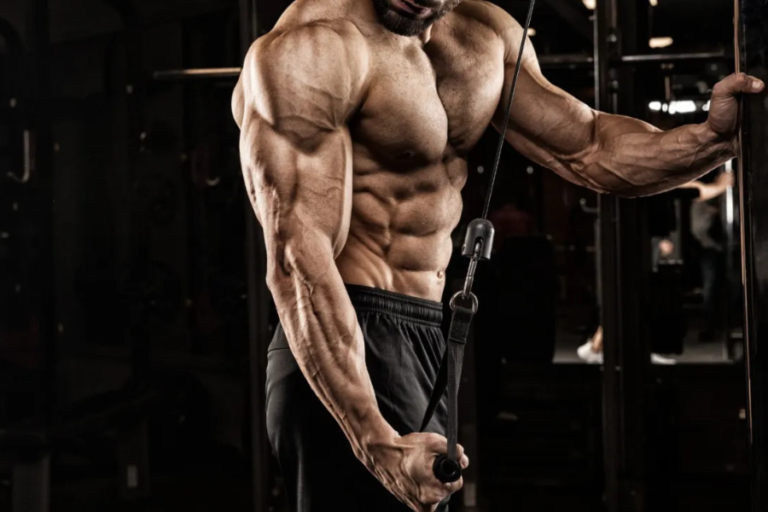
Cable tricep pushdowns are a gym mainstay, but you can also do them with resistance bands at home. Though it’s primarily an isolation exercise, you can switch grips, attachments, and angles to target different tricep heads.
- Setup: Stand in front of a cable machine or anchor a resistance band at about head height. Grip a straight bar, V-bar, or rope attachment.
- Action: Start with your elbows bent at your sides. Extend your arms downward until they’re straight, then return to the starting position.
- Tips: Avoid locking out your elbows too forcefully. Instead, stop just before fully extended to keep tension in the triceps.
According to Gymshark, rope attachments often boost activation by letting you flick your wrists outward at the bottom of the movement [2]. Maintain a controlled pace to keep your shoulders stable and ensure that your triceps do the work.
Apply cable overhead extension
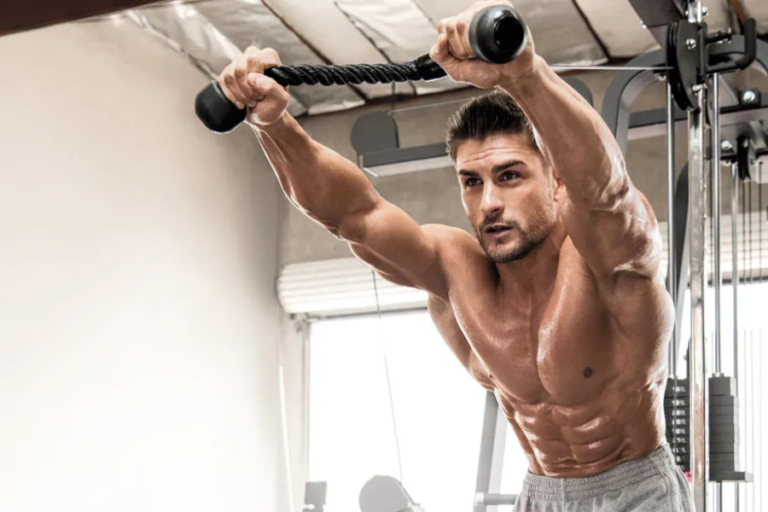
If you enjoy overhead moves but prefer continuous cable tension, try standing or kneeling cable overhead extensions. This variation closely mirrors a dumbbell overhead extension yet adds cable resistance for a distinct training stimulus.
- Setup: Adjust a cable machine so the pulley is at the lowest setting. Face away from the machine, grasp the handle or rope behind your head, and align your elbows with your ears.
- Action: Extend your elbows forward and upward in a smooth motion. Slowly return under control.
- Tips: Keep your lower back and core braced. If kneeling, stagger your stance for better balance.
For beginners, Planet Fitness recommends cable overhead extensions as part of a well-rounded tricep session, noting that proper form is key to avoiding lower back strain [4]. Use moderate weight and focus on clean reps.
Test weighted bench dips
If bodyweight dips become too easy, adding resistance is a solid way to continue challenging yourself. Weighted bench dips focus on the long head while still hitting medial and lateral fibers. They are also a great halfway step if you eventually plan to move to parallel bar dips.
- Setup: Place a weight plate on your lap or hold a dumbbell between your thighs. Support yourself on the bench as you would for normal dips.
- Action: Lower your body until your arms form roughly a 90-degree angle, then push back up. Keep your torso upright and abs tight.
- Tips: Position your feet on another bench or stable surface for an extra challenge, or keep them on the floor for stability.
Men’s Health UK highlights that dips are among the best ways to build your arms’ size and strength, and even simple progressions like adding weight can spur new growth [1]. Just be cautious not to drop too low, which can strain your shoulders.
Finish with EZ Bar skullcrusher
Skullcrusher variations are so popular that they deserve a second spotlight, especially the EZ Bar version. This bar’s shape reduces wrist strain while providing a range of possible grips.
- Setup: Lie on a bench or floor, holding the EZ Bar at the curved grips that feel most comfortable for your wrists.
- Action: Lower the bar toward your forehead (or slightly behind) by flexing at the elbows. Raise it back up by extending your elbows fully, but don’t lock them out.
- Tips: Keep your elbows from flaring out. A narrower hand placement often hits the triceps harder.
Muscle & Strength identifies the EZ Bar skullcrusher among the best tricep exercises for targeting the long, medial, and lateral heads simultaneously [3]. Pair this exercise with compound moves like close-grip bench press for balanced growth.
Reps, sets, and scheduling
How often should you work these exercises into your plan? For most lifters, training triceps 2-3 times per week is a good start. Try 3-4 sets per exercise, aiming for 8-12 reps unless you prefer lower reps for strength or higher reps for muscular endurance. Stay near, but not beyond, failure to protect your joints. Rest 1-2 minutes between sets to keep your performance consistent.
Form and injury prevention
When you train your triceps, remember that good form trumps heavy weights. Here are a few tips to keep in mind:
- Keep elbows close to your torso or your ears, depending on the exercise.
- Maintain a neutral spine by engaging your core.
- Slow, controlled movements build more tension in the muscle.
- Avoid locking out or hyperextending your elbows.
- If you feel shoulder or elbow pain, shorten the range of motion or switch to a safer variation.
Planet Fitness underscores that proper posture, full range of motion, and controlled breathing are crucial to preventing injuries, especially for beginners [4].
Why these exercises matter
Triceps are responsible for extending your elbow, which is fundamental to countless daily movements. Studies show that they contribute up to two-thirds of your arm size, making them a prime target if you want strong, sculpted arms. Lumbar stability and shoulder engagement also come into play with many of these moves, so you can build total-body coordination while giving your arms a thorough workout.
Body-transformation coach Charlie Johnson explains that tricep dips alone significantly bolster the long head, which is vital for bigger arms that look good from all angles [1]. And from a practical standpoint, strong triceps help with tasks like pushing shopping carts or lifting a suitcase into the overhead bin.
Getting started on your path
If you are a beginner, pick 2-3 exercises that appeal to you. For instance, combine diamond push-ups, overhead dumbbell extensions, and dumbbell kickbacks for a balanced routine. Gradually add or rotate in new exercises every few weeks. Once you feel comfortable, experiment with heavier loads (progressive overload) or advanced variations like weighted dips and single-arm overhead extensions. Always make time for post-workout stretches to aid muscle recovery and prevent tightness.
Where possible, mix in both compound exercises (like the close-grip bench press and dips) and isolation moves (such as kickbacks or skull crushers). Compound lifts let you lift heavier weights, driving significant mass and strength gains. Isolation lifts let you home in on weaker spots.
Bringing it all together
You do not need an expansive home gym or fancy equipment. Even a simple pair of dumbbells, a bench, or just your body weight can help you build stronger arms. The idea is consistency: two or three 30-minute tricep sessions each week can make a difference in your physique and functional strength.
Remember:
- Warm up thoroughly.
- Prioritize form and full range of motion.
- Use progressive overload (heavier weights, more reps, or shorter rest) over time.
By focusing consistently on the best tricep exercises, you nurture a foundation not just for bigger arms, but for better overall upper-body performance. Keep pushing, stay consistent, and watch your triceps develop the power and definition you have been wanting. Feeling strong in everyday life—and seeing the results in the mirror—makes every rep worth it. Enjoy your workouts, and keep aiming high.