
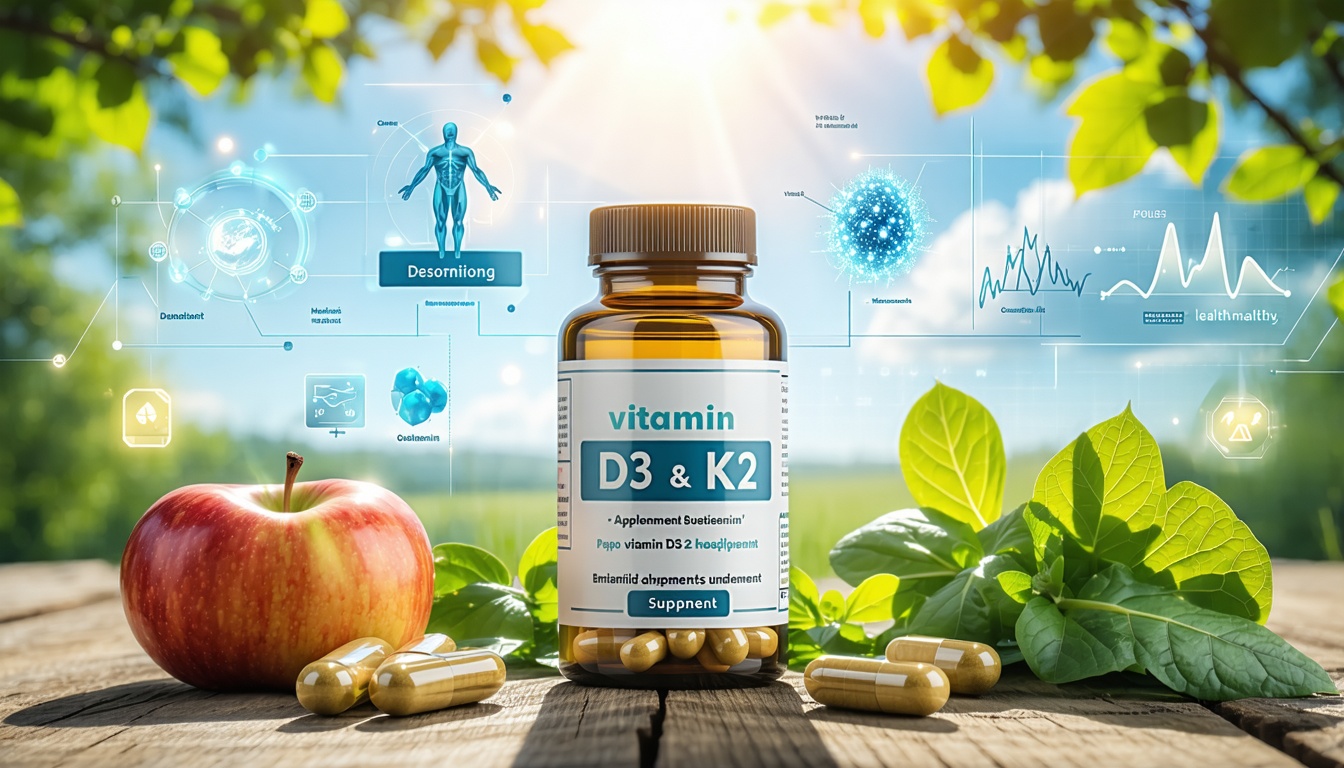
D3 and K2 Vitamin supplements are quickly gaining recognition as a powerful duo for supporting overall wellness. These two essential nutrients play a synergistic role in maintaining strong bones, a healthy heart, and even aiding in immune defense. While Vitamin D3 ensures the body effectively absorbs calcium, Vitamin K2 ensures that the calcium reaches the right places—like your bones and teeth—rather than accumulating in arteries or soft tissues. Understanding how these vitamins work together can help you make informed choices for your daily health routine.
Understanding Vitamin D Supplements
Importance of Vitamin D
Alright, let’s talk about the sunshine vitamin, Vitamin D. It’s like Superman for your bones, helping calcium do its job to keep them strong and sturdy. Beyond building bones, it’s a jack-of-all-trades supporting your immune system, muscles, and even those pesky neurons firing in your brain (Mayo Clinic).
Getting enough of this vitamin from food is tough. Many folks are looking at a supplement bottle because their sun-time is limited or absent. Several things mess with your body’s Vitamin D production—like how much time you spend outside, what season it is, where you’re hanging out on the globe, and even your skin color. And yes, sunscreen is your skin’s best friend against cancer, but it also hampers your vitamin-making process.
Certain groups need to watch their Vitamin D levels more closely:
| Who’s at Risk? | Why? |
|---|---|
| Older folks | Skin just doesn’t make it like it used to |
| Breastfed babies | Not getting much from food sources |
| Darker skin individuals | Melanin’s got a blocking game going on |
| People with more body fat | Vitamin D gets stuck in fat |
| Folks with certain health issues | Things like Crohn’s mess with absorption |
Role of Vitamin K2
Now, Vitamin K2 joins the party and teams up with D3, making sure all that newfound calcium doesn’t wander off to places it shouldn’t. Vitamin D gets the calcium into your blood—great stuff—but it’s K2 that directs it into your bones and teeth instead of letting it chill in your arteries or kidneys.
This teamwork between D3 and K2 is like Batman and Robin—one without the other reduces their superpowers. Without enough K2, you might end up with too much calcium where you don’t want it. So look for a sidekick supplement that combines D3 and K2, ensuring you’re getting the full package Vitamin D3 and K2 Supplements.
Before you start popping Vitamin D pills like candy, it’s best to chat with your healthcare buddy. They’ll let you know if you should mix in some K2, especially if you’re high-dosing D3 or worried about where all that calcium is wandering off to.
Benefits of Vitamin D and K2
Vitamin D and K2 are like a health power duo that can rev up your routine and keep you feeling great. You’ll see why these vitamins are worth your attention, especially if you’re eyeing a d3 & k2 vitamin.
Bone Health
Vitamin D is your bones’ best buddy. It helps your body soak up calcium, which is key for building strong bones (Mayo Clinic). Without it, calcium can’t do its job, leaving your bones fragile and more likely to break.
Now let’s talk about Vitamin K2—it’s like the glue in the calcium story, making sure the calcium sticks to your bones. This teamwork boosts bone strength and helps keep osteo-whatnow? Oh, osteoporosis, at bay.
| Vitamin | Role in Bone Health |
|---|---|
| Vitamin D | Aids in calcium absorption |
| Vitamin K2 | Helps calcium stick to bones |
Heart Health
When it comes to keeping your ticker ticking, Vitamins D and K2 do a lot. Vitamin K2 makes sure calcium doesn’t go rogue and end up blocking your arteries, leading to heart problems (WebMD). More K2 can mean less chance of heart-related issues.
Vitamin D also keeps your calcium levels balanced, which is a big deal for your heart. Lack of Vitamin D has been tied to heart health woes. Keeping your vitamins in check is a win for your heart.
| Vitamin | Role in Heart Health |
|---|---|
| Vitamin D | Balances calcium levels |
| Vitamin K2 | Stops calcium from clogging arteries |
Potential Cancer Protection
There’s some buzz about Vitamin K2 and its cancer-fighting potential. Early findings are promising, showing it might slow down or even stop cancer cells, especially in cancers like liver and prostate (WebMD).
Vitamin D gets in on the action too, seeming to help fend off some cancers, including breast and colon. Its role in boosting your immune system might give it some cancer-fighting oomph.
| Vitamin | Cancer Protection Role |
|---|---|
| Vitamin D | May lower cancer risk |
| Vitamin K2 | May hold back cancer cell growth |
Adding both Vitamins D and K2 to your daily mix with a supplement like vitamin d3 and k2 can help you get the most out of these health perks.
Factors to Consider
When you’re thinking about picking up vitamin D supplements, keep your eyes on a few important things. We’re diving into the types of vitamin D you can snag, where to find vitamin K2, and how these might mix with any meds you’re on.
Types of Vitamin D
There are two main kinds of vitamin D supplements: D2 (ergocalciferol) and D3 (cholecalciferol). D3 does a better job at boosting and keeping your vitamin D levels up where they should be. D3 comes from animal sources, while D2 is typically from plants like yeast or fungi. Check out this quick breakdown:
| Type of Vitamin D | Source | How Good It Works | Common Uses |
|---|---|---|---|
| Vitamin D2 | From plants (yeast) | Not as good at bumping up blood levels | Food fortification, some supplements |
| Vitamin D3 | From animals (like lanolin or fish liver) | Best for upping your vitamin D levels | Most popular in supplements |
Want to know more? Peek at these links for vitamin D3 and D2.
Vitamin K2 Sources
Vitamin K2 is all about helping your bones and works hand in hand with vitamin D. You mostly find it in animal products and fermented stuff. Here’s where you can get your K2 fix:
| Food Source | Type of Vitamin K2 |
|---|---|
| High-fat dairy (cheese, butter) | MK-4 |
| Egg yolks | MK-4 |
| Liver | MK-4 |
| Fermented goods (Natto, sauerkraut, miso) | MK-7 |
Incorporate K2-rich eats into your meals or consider a supplement if you’re not munching on these foods often.
Interaction with Medications
Watch out for any hiccups when combining vitamin D and K2 with your other meds. Some blood thinners might not play nice with vitamin K, which could mess with how they work. Always chat with your doctor before jumping into new supplements, especially if meds are already on your daily checklist. Research indicates that vitamins D3 and K2 can generally be taken together in small amounts without worry (Health).
Get a clearer picture of how these vitamins team up by exploring more about K2 and D3 and vitamin D3 and K2 supplements.
Recommended Dosages
Thinking about popping a vitamin D pill or dabbling with vitamin D3 and K2 blends? Knowing how much to take is important. Here’s a handy guide to keep you on track with your vitamins D and K2, plus a few tips on picking the right supplement for you.
Daily Intake Guidelines
How much Vitamin D you need can depend on both your age and your health. Take a gander at this chart to see where you fit in:
| Age Group | Recommended Daily Intake (IU) |
|---|---|
| Babies (up to 12 months) | 400 |
| Everyone Else (1-70 years) | 600 |
| Golden Oldies (over 70 years) | 800 |
More Vitamin D can mean stronger bones and a spine that won’t scream every time you stretch (PubMed Central).
For Vitamin K2, aim for these numbers:
| Vitamin K2 Intake (micrograms) |
|---|
| Grown-ups (all ages) |
| Total K (K1 + K2 Combined) |
Despite most folks munching mostly on K1, K2 is important too—think K2 for vitality, with nods of approval from the Cleveland Clinic.
Supplement Considerations
Looking to snag a good supplement? Here’s the scoop:
- Which Vitamin D?: Snag a bottle marked vitamin D3 (cholecalciferol) over D2 (ergocalciferol) if you want a real boost in your D levels.
- Mix and Match: Joint options like Vitamin D3 and K2, found in vitamin D3 and K2 combos, can give your bones and heart extra support.
- Add Calcium: A diet with vitamin D and calcium (1,000 to 1,200 mg a day) is like giving your bones an extra armor.
- Your Health Matters: Before diving into new supplements, have a chat with your doctor, especially if you’re already popping pills, to dodge any hiccups.
With a bit of thought about how much and what kind, you can slide vitamin D3 and K2 into your life and feel the benefits come rolling in.
Safety and Side Effects
Thinking about adding vitamin D3 and K2 to your daily habit? Let’s chat about the good, the bad, and everything in between.
Risks of Excessive Intake
Vitamin D plays nice when you stick to the rules, but going cowboy with it? Not the best idea. The magic number here is 4,000 IU each day. Cross that line, and you might be in hypercalcemia territory—fancy talk for too much calcium floating around your blood. And that’s a one-way ticket to nausea, weakness, and kidney woes. It’s kind of like having too much of a good thing turning sour. Before you go increasing doses, a quick chat with your doctor could keep you out of trouble, especially if you’re juggling meds or other health issues.
Vitamin D Deficiency Risks
Now, let’s flip the coin. Missing out on vitamin D is more common than you’d think. Picture this: over 92% of Black folks and 61% of White Americans are running low on this sunshine vitamin, marked by 25(OH)D levels dipping below 32 ng/mL (PubMed Central). The elderly, breastfed babies, darker-skinned individuals, snow-dwellers, and sun-avoiders – you might need extra attention. Usual signs? Tiredness, achy bones, limp muscles, and possible fractures. Got a hunch you’re low? Your healthcare provider can confirm with a quick blood check.
Who Should Consider Supplements
Thinking supplements? Some folks definitely should. Maybe you’re indoorsy by geography or personal preference, or perhaps your diet misses the mark. Here’s the lowdown on daily dose recommendations:
| Age Group | Recommended Daily Intake (IU) |
|---|---|
| Birth to 12 months | 400 |
| Ages 1-70 | 600 |
| Ages 71 and older | 800 |
A friendly nudge: if you see yourself in any of these descriptions, check in with your physician to figure out if vitamin D supplements are a must for you. They’ll help you make sure you’re getting just the right balance of D3 and K2 without a hitch.
Final Thoughts
Incorporating both Vitamin D3 and K2 into your daily supplement regimen can significantly improve bone density, heart health, and possibly even reduce the risk of certain cancers. These vitamins are most effective when used in combination, maximizing their benefits while minimizing potential risks such as calcium misplacement. However, as with any supplement, the key is balance and moderation—stick to recommended dosages and consult your healthcare provider before beginning any new supplement, especially if you’re on medication or have existing health conditions. When used thoughtfully, this nutrient duo can be a valuable asset to your long-term health strategy.
Frequently Asked Questions (FAQ)
What are the benefits of taking Vitamin D3 and K2 together?
Vitamin D3 helps your body absorb calcium, while Vitamin K2 ensures that calcium is directed to the bones and teeth where it’s needed. Together, they support bone strength, reduce the risk of arterial calcification, and promote overall cardiovascular health.
Who should consider taking D3 and K2 supplements?
People with limited sun exposure, older adults, individuals with darker skin tones, breastfed infants, and those with certain medical conditions that impair nutrient absorption may particularly benefit from D3 and K2 supplements.
Are there any risks associated with taking too much Vitamin D?
Yes. Exceeding 4,000 IU of Vitamin D daily can lead to hypercalcemia, a condition where too much calcium builds up in the blood, potentially causing nausea, kidney issues, and other health complications.
What are good food sources of Vitamin K2?
Vitamin K2 is primarily found in animal products and fermented foods. These include high-fat dairy (like cheese and butter), egg yolks, liver, and fermented items like natto, sauerkraut, and miso.
Should I take calcium with Vitamin D3 and K2?
Adding calcium to your regimen can be beneficial, especially when combined with D3 and K2, as it supports bone density. However, it’s important not to exceed daily recommended levels and to talk to your doctor before combining supplements.
Do Vitamin D3 and K2 interact with medications?
Yes, especially with blood thinners, as Vitamin K can affect blood clotting. Always consult a healthcare professional before starting a D3 and K2 supplement if you’re on prescription medications.